
Frameworks
What Makes a Sustainable Tokenomics Model? (Real Examples)
What you'll learn in this Analysis
What “sustainable tokenomics” actually means
Why most token models fail over time
The difference between real yield vs inflationary rewards
A framework to evaluate any token model

1. The Core Problem in Tokenomics
Most Web3 projects launch with:
🚀 High APY
🎁 Rewards
📢 Strong hype
But after a few months:
📉 Token price drops👥 Users leave💀 Project dies
👉 Why?
Because most tokenomics are:
❌ Unsustainable by design
2. Sustainable vs Unsustainable Tokenomics
Unsustainable Model
Rewards come from printing tokens
No real revenue
Users farm and dump
Sustainable Model
Rewards come from real value generation
Revenue > emissions
Incentives aligned long-term
Key Difference
Unsustainable | Sustainable |
Inflation-driven | Revenue-driven |
Short-term growth | Long-term stability |
Users extract value | Users create value |
3. Why Most Tokenomics Fail
1. Emission-Based Rewards
Projects distribute tokens like:
Farming rewards
Liquidity mining
Staking incentives
👉 Problem:
Tokens are created from nothing
Result:
Selling pressure
Price collapse
Incentive death
2. No Real Revenue
If a protocol does not generate:
Fees
Cash flow
Economic value
👉 Then:
Rewards are just redistribution
3. Misaligned Incentives
Users are rewarded for:
Farming
Dumping
Short-term actions
👉 Not for:
Building
Holding
Contributing
4. Weak Token Utility
Many tokens have:
No real use
No demand
No necessity
👉 If nobody needs the token→ It loses value
4. Real Examples (This is where it clicks)
Example 1: Uniswap
Why it works:
Generates trading fees
Massive real usage
Strong liquidity
👉 Key Insight:
Value comes from activity, not emissions
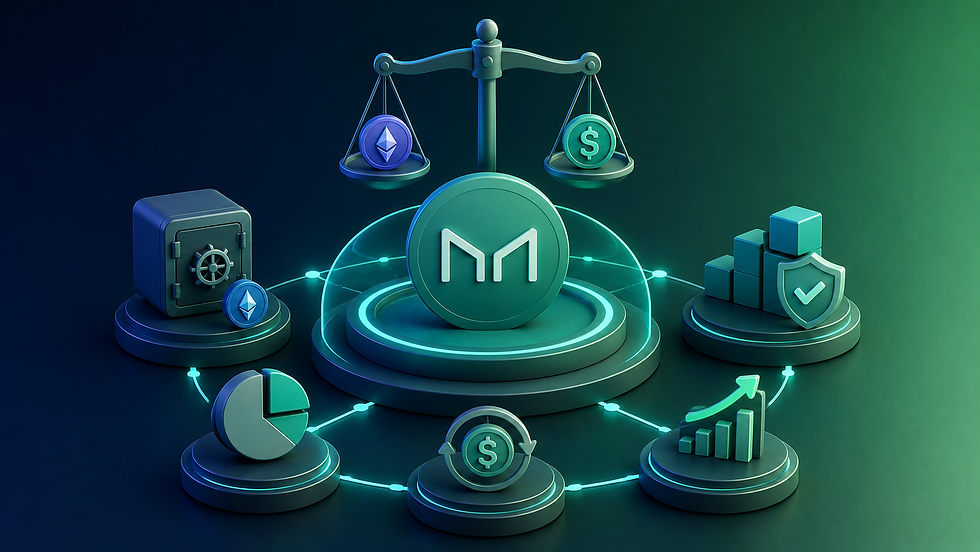
Example 2: MakerDAO
Why it works:
Backed by collateral
Generates stability fees
Focus on long-term system health
👉 Key Insight:
Stability > growth
Example 3: GMX
Why it works:
Real yield (fees from traders)
Revenue shared with users
No excessive inflation
👉 Key Insight:
Users earn from real revenue, not fake rewards
Example of Failure: Axie Infinity
What went wrong:
Rewards paid in inflationary tokens
No sustainable demand
Users farmed → then exited
👉 Key Insight:
If rewards depend on new users→ It’s not sustainable
5. The Sustainable Tokenomics Framework
Evaluate any project using this:
1. Revenue Source
Where does value come from?
Fees? Users? External demand?
2. Emissions vs Revenue
Are rewards higher than income?
Is inflation controlled?
3. Token Utility
Is the token required?
Or just optional?
4. Incentive Alignment
Are users rewarded for long-term behavior?
Or short-term extraction?
5. Demand Drivers
Why would people buy/hold the token?
👉 If these are weak→ Model will fail
6. Real Yield vs Fake Yield
❌ Fake Yield
Comes from token emissions
No real value
Unsustainable
✅ Real Yield
Comes from protocol revenue
Backed by activity
Sustainable
👉 This is one of the most important concepts in DeFi
7. What Actually Works
Sustainable Tokenomics Formula
Revenue + Utility + Aligned Incentives
Breakdown:
Revenue → creates real value
Utility → creates demand
Incentives → align users
👉 Remove one → system weakens
👉 Remove two → system collapses
8. Real Insight (This is critical)
High APY is usually a warning signNot an opportunity
Most beginners chase:❌ Rewards
Smart operators look for:✅ Sustainability
Final Takeaway
A sustainable token model is NOT:
❌ High APY
❌ Fast growth
❌ Hype-driven
It is:
✅ Revenue-backed
✅ Utility-driven
✅ Incentive-aligned
March 9, 2026
How MakerDAO Maintains Stability in DeFi

March 9, 2026
How MetaMask Became the Default Web3 Wallet

March 9, 2026
Olympus DAO vs GMX vs Friend.tech

March 9, 2026
Why Ethereum Became the Foundation of Web3

March 8, 2026
Why Uniswap Became a Leading DeFi Protocol

March 8, 2026
How OpenSea Dominated the NFT Market Early On

March 7, 2026
Growth Strategy Behind StepN (And Why It Slowed Down)

March 7, 2026
How Blur Disrupted OpenSea

March 6, 2026
Stablecoin collapse scenarios

March 6, 2026
Uniswap vs SushiSwap: Which Model Works Better?

March 5, 2026
What Went Wrong with Terra Luna

March 4, 2026
The Rise and Fall of Axie Infinity

March 3, 2026
Why Some Projects Fail to Retain Users

March 2, 2026
Why Most NFT Projects Fail (Real Case Breakdown)

March 1, 2026
Why Many Play-to-Earn Models Fail (Economic Breakdown)

February 27, 2026
NFT success vs failure analysis

February 26, 2026
DAO governance evolution (Aave)

February 24, 2026
Governance comparison (MakerDAO vs Aragon vs Optimism)

February 23, 2026
Different DAO Models Compared (What Works Best?)
